Inside the assembly
Exploded enclosure, electronics and battery assembly.
Embedded product development
A helmet-mounted sensor device being developed to monitor conditions on construction sites.
A four-layer board, enclosure and firmware carried to a working helmet prototype.
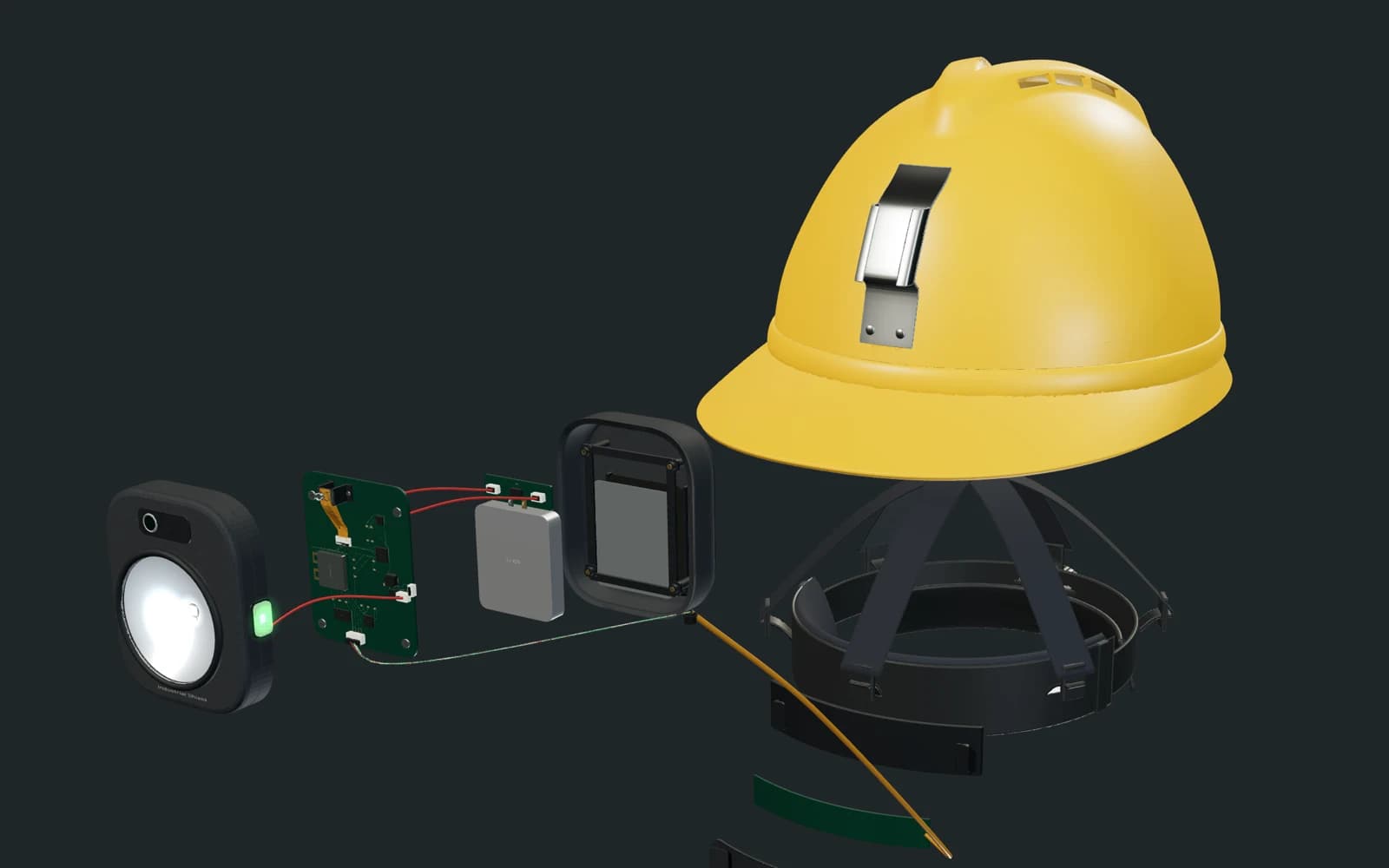
The sequencing was the hard part. I set the bring-up order so packaging, power and antenna were settled before a board was spun, then did the electronics, firmware and enclosure.
Electronics, firmware and enclosure work carried to the helmet proof of concept.
Engagement
Embedded product engineering and R&D
A connected sensing device has to reconcile packaging, power, antenna placement, communications and firmware before anyone can tell whether the complete assembly works. Get the order wrong and you spin boards for months. It also has to survive a construction site, which rules out most of what works on a bench.
How it was approached
This is an original product. Everything from component selection up to the device backend was designed here, with commercial parts integrated where they earned their place.
The helmet and the person wearing it on site.
Evaluated sensor interfaces selected against real site constraints.
Four-layer PCB, power architecture, antenna and USB loom routing.
FreeCAD enclosure, mounting and clearance studies.
ESP32 bring-up firmware, device state and diagnostics.
Device communications and server infrastructure.
Engineering load
Mechanical
Electrical
Embedded
Software
Operations
Define the device around practical power and interface constraints.
Exercise each interface before trusting the whole assembly.
Turn open engineering questions into staged, checkable work.
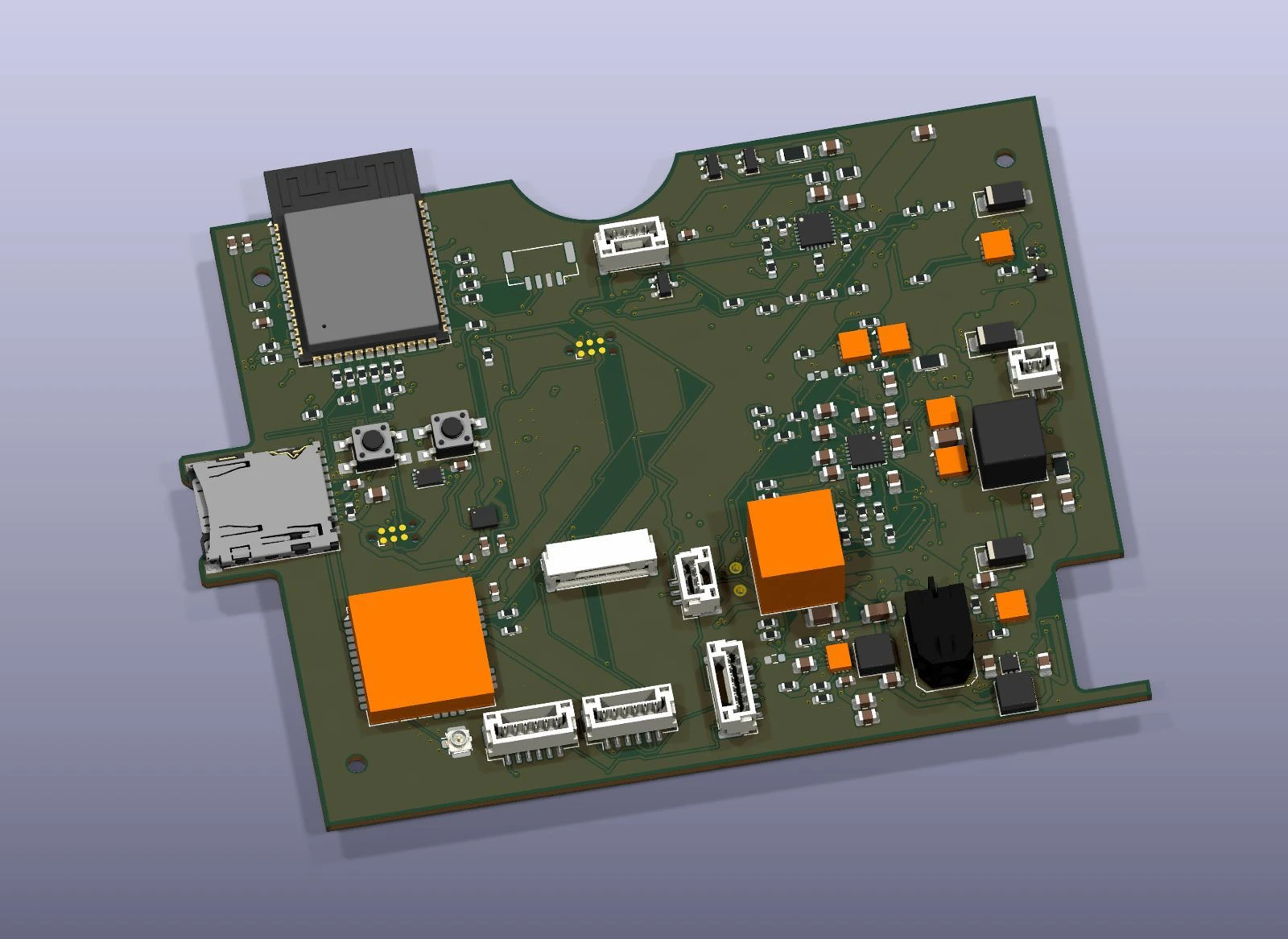
Electronics
The board the whole device is built around, with the ESP32 module, power stage and sensor connectors populated.
439 vias · 2,273 track segments · zero open nets
Same board
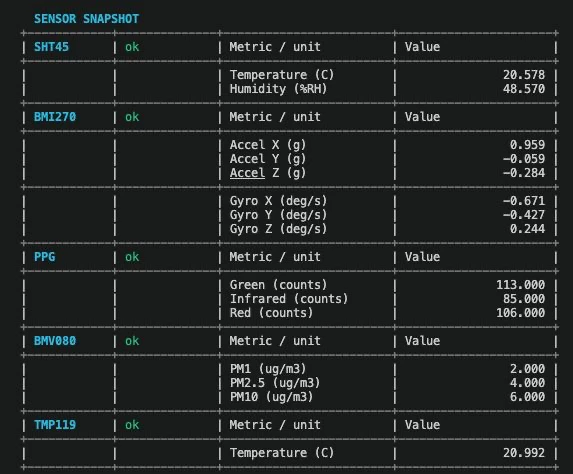
Bring-up
Firmware pulling real values off every interface: climate, motion, optical and particulate.
SHT45 · BMI270 · MAXM86161A · BMV080 · TMP119
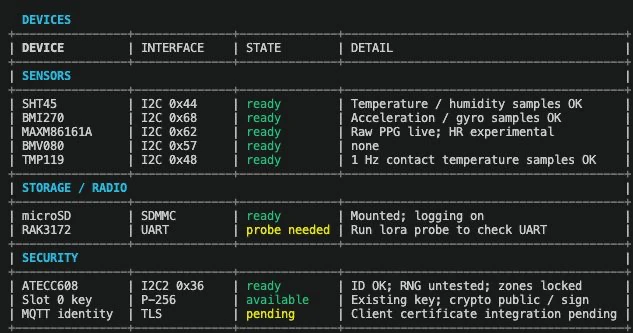
Bring-up
A per-interface state view, which keeps what is proven visibly separate from what is still pending.
Sensors ready · storage mounted · radio and identity pending
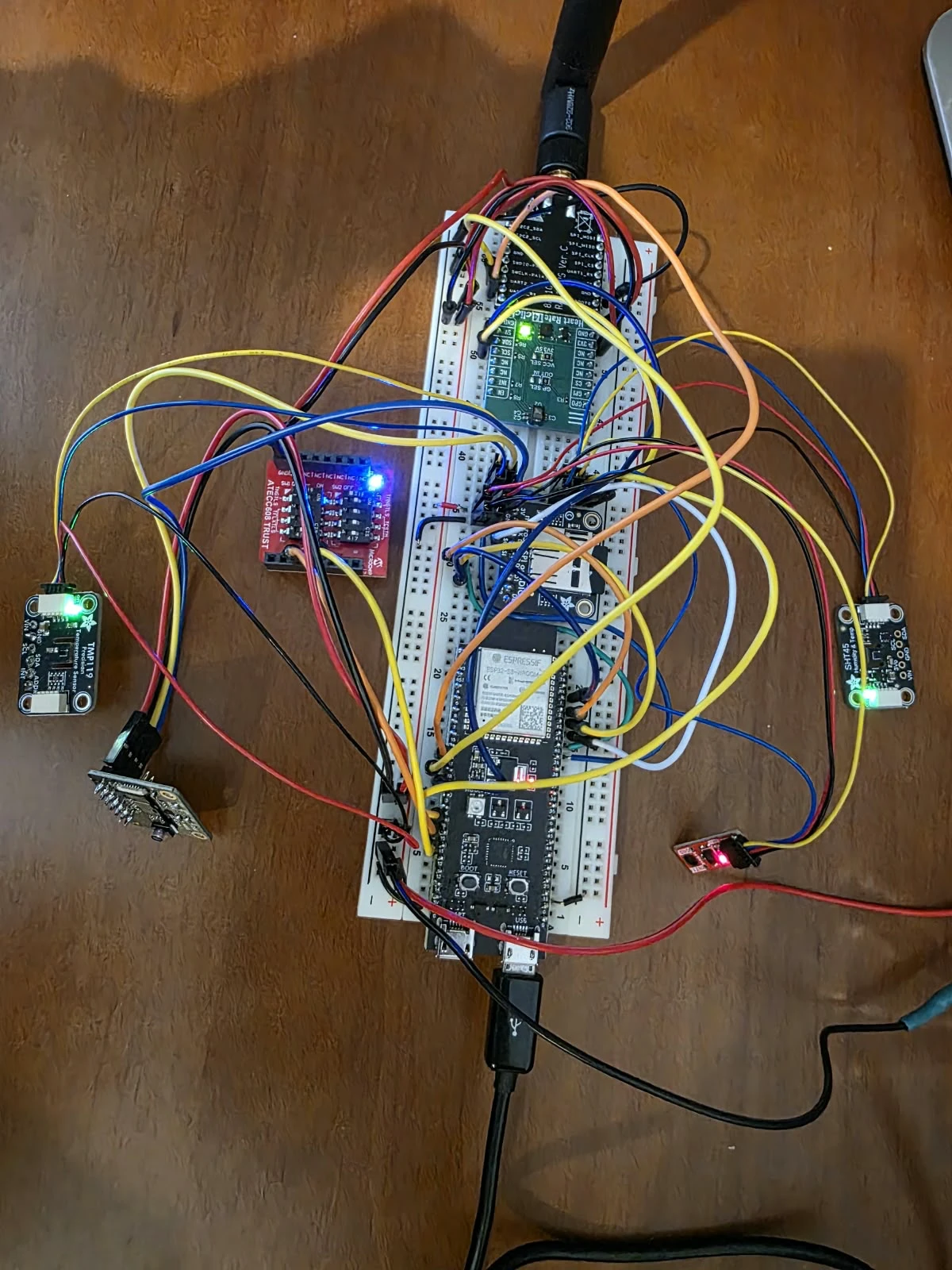
Bring-up
Each sensor proven against an evaluation board before it was committed to the custom layout.
Sensors brought up one at a time, so a failure stays attributable
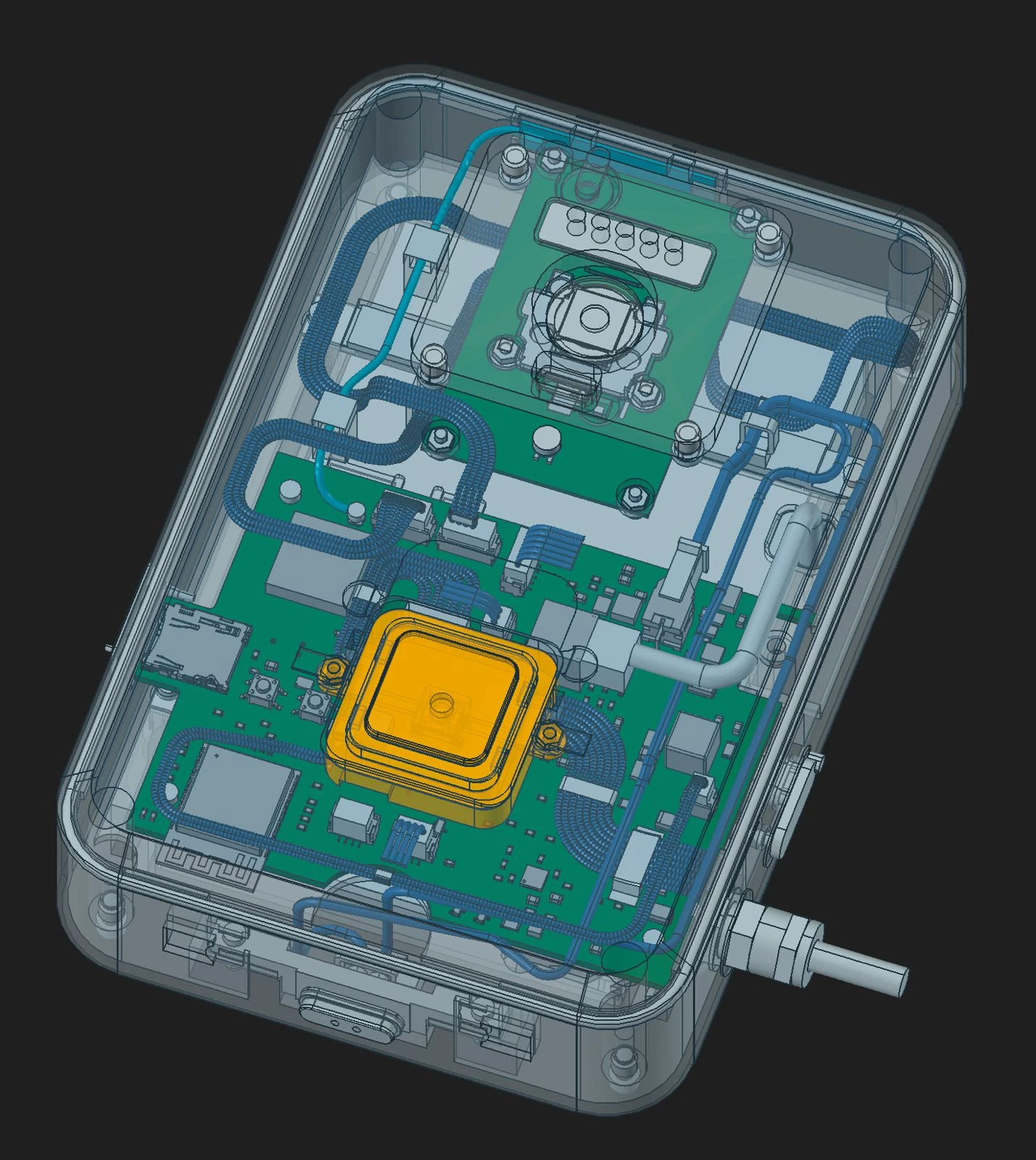
Mechanical
The FreeCAD assembly that settled where the boards, optical sensor and internal harness actually fit.
Mounting clearance corrections fed back into the PCB
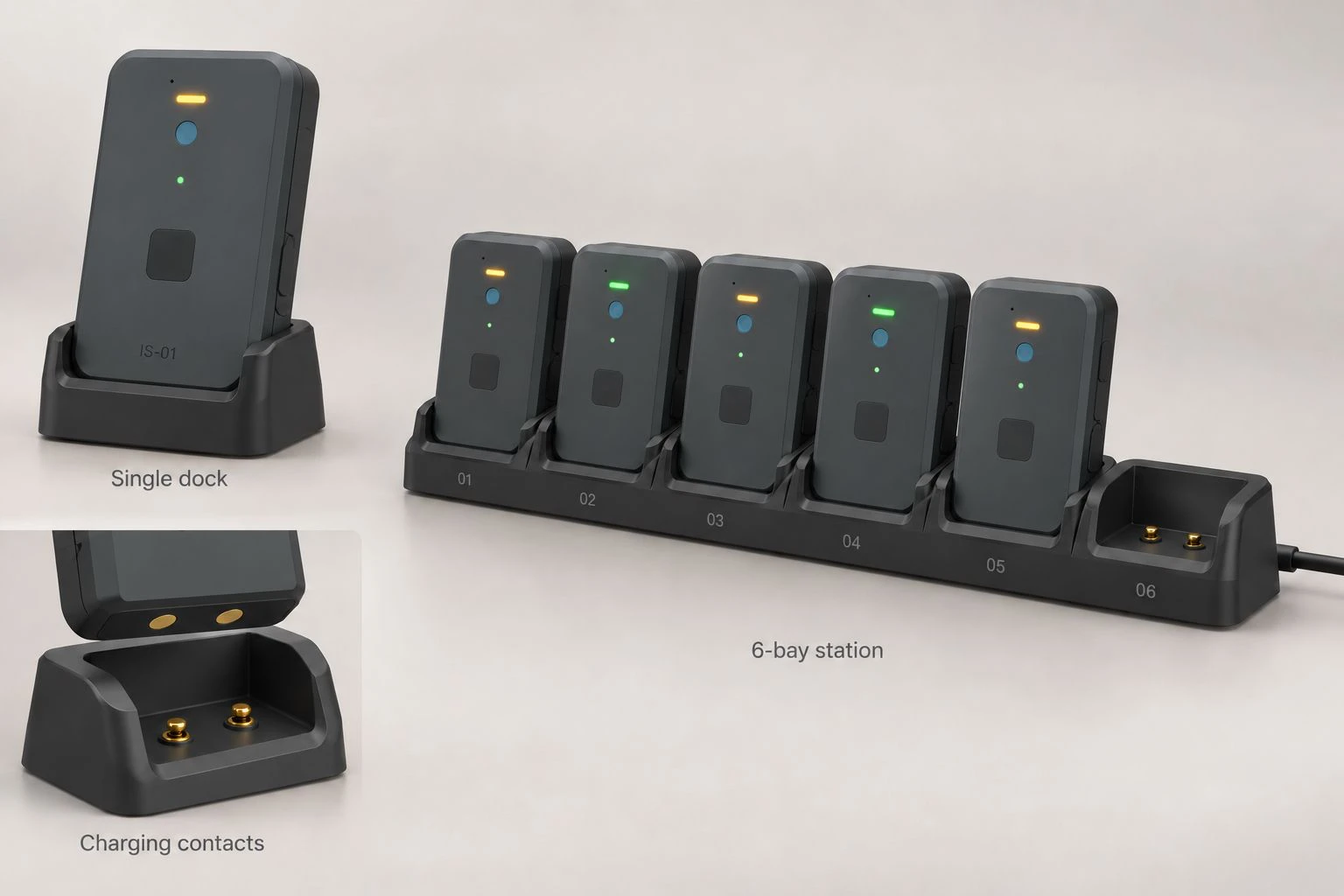
Mechanical
Single dock and six-bay station, so a site can return a shift of helmets to charge in one place.
Pogo-contact concept · 1-bay and 6-bay
Frame 1 of 6: Four-layer main board
Every figure here is observable in the delivered repository, product or artefacts.
Zero open nets
The current main board routes 439 vias and 2,273 track segments across four copper layers with no open nets or missing connections.
Clean audit
A strict layout audit closed out with zero off-centre via entries and zero missing courtyards, with the mounting correction moving hardware and enclosure support together.
Staged bring-up
The test plan separates power, interfaces, sensors and complete-device checks, so a failure points at one layer.
Technical stack
ESP32
Embedded C/C++
KiCad
FreeCAD
Sensor interfaces
Device communications
Capabilities applied
Electronics design
Embedded software
Mechanical integration
Prototype planning
Exploded enclosure, electronics and battery assembly.

Three sensing nodes, one gateway, and the engineering needed to connect them.
Connected hardware and controls
Leaders see which part of the organisation is under stress, and for how long.
Workplace wellbeing software
Seller uploads are checked before anyone sees them, in a queue that does not hold up the listing.
Marine marketplace
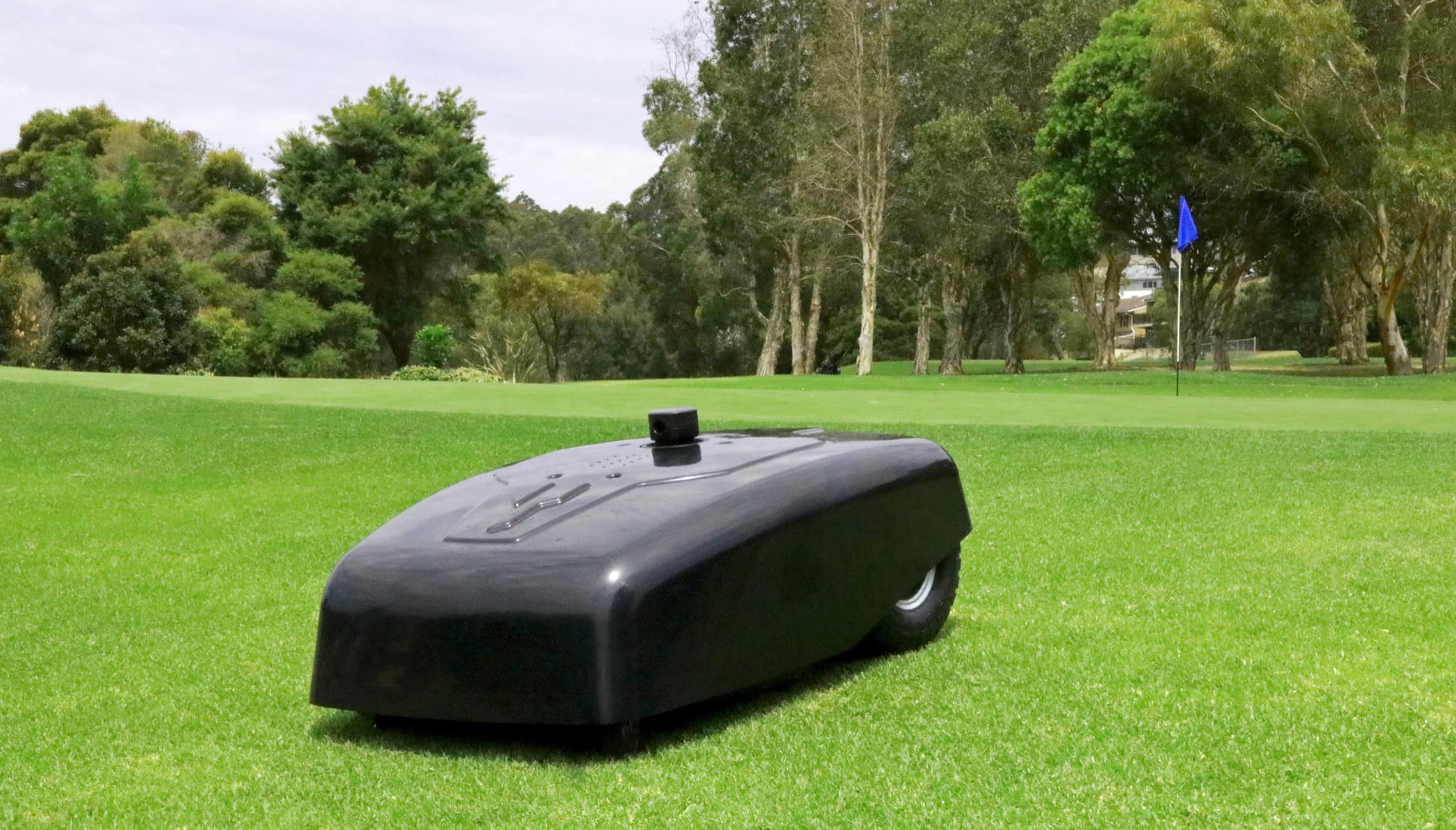
A working mower prototype, trials with three customers, and $128K in investment and grants.
Autonomous robotics
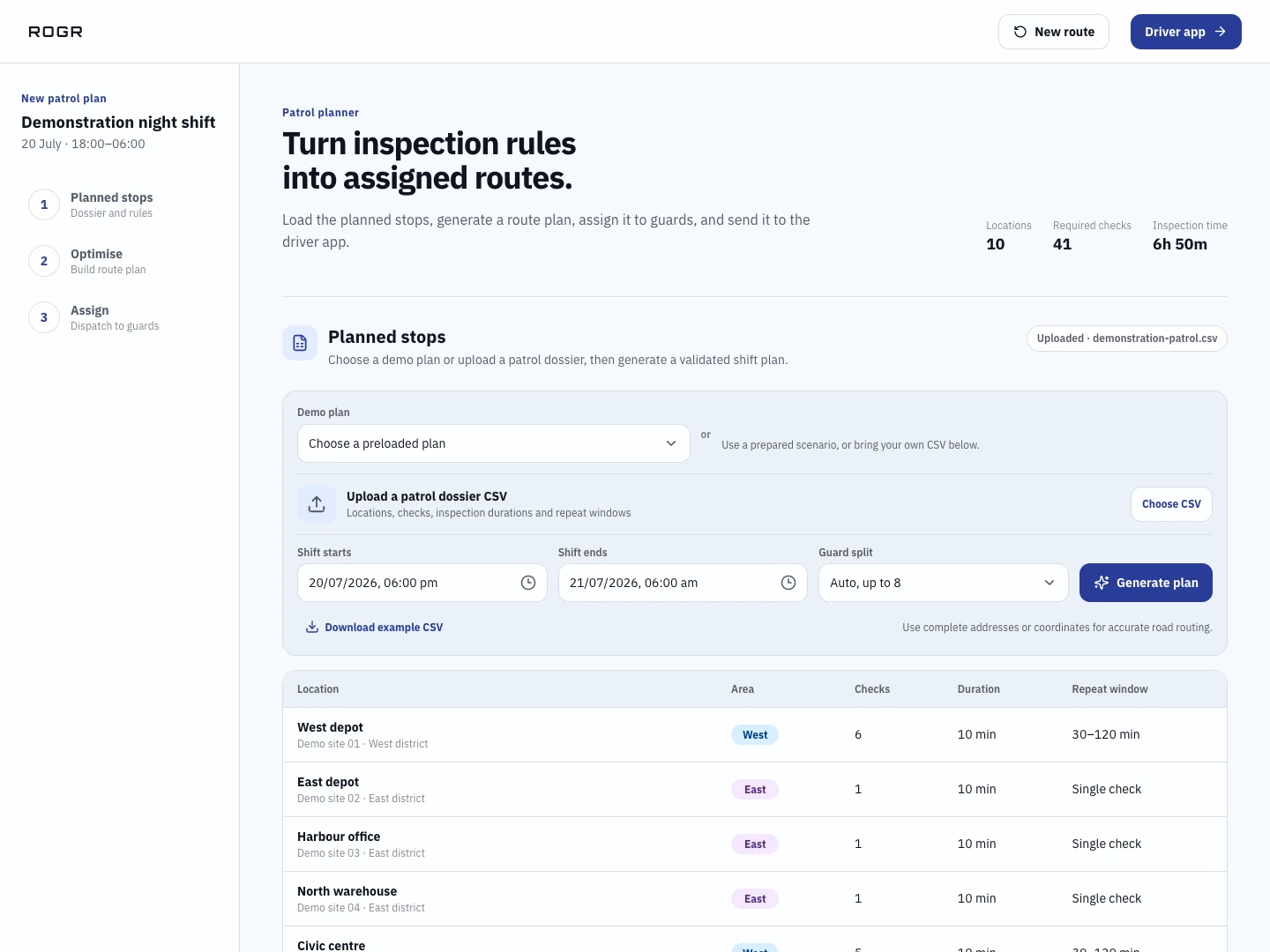
A 41-check night shift proven impossible for one guard — 41 minutes short before any route search — and a validated two-guard split that completes every check.
Security operations software
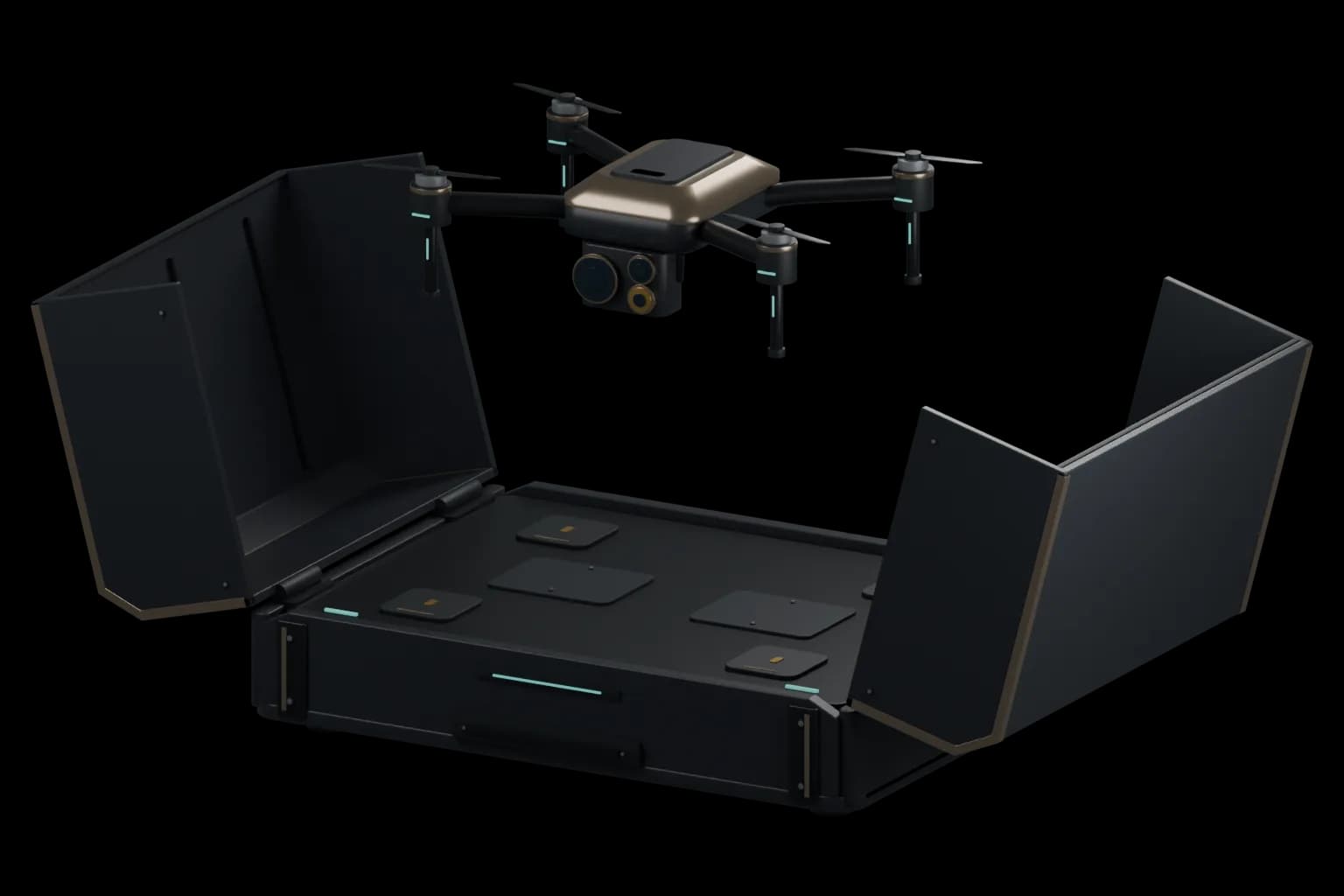
The client raised $200K in venture funding to deliver stage one of the project.
Equine product engineering
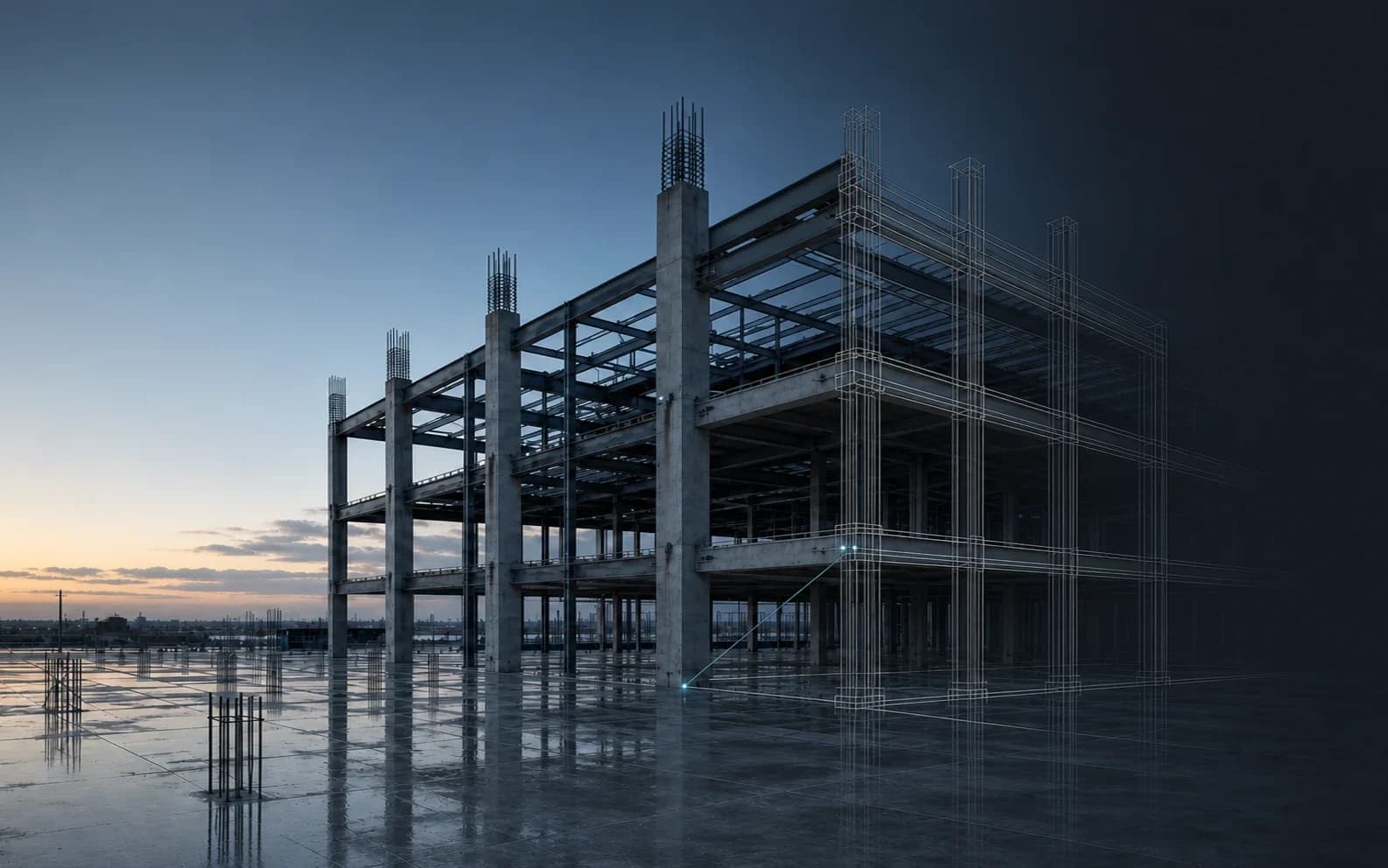
Crews work from the building model instead of from spreadsheets and memory.
Construction software
Buyers can see what is inside a piece of software and reach the people who can change it.
Software marketplace
A broker gets a ranked lender answer with the policy rows it came from.
Lending software